
The propagation principle of sound waves
Sound is a longitudinal wave of mechanical waves, which requires a medium (solid, liquid, gas) to propagate. It is transmitted outward through periodic vibrations (compression and rarefaction) between the molecules of the medium. Its propagation speed is affected by the density of the medium, elastic modulus, temperature, etc., and follows the wave equation (such as reflection, refraction, interference, diffraction), and has physical properties such as frequency, wavelength, and amplitude.
Sound waves travel faster in denser media. However, the elastic modulus of the medium also needs to be considered. The balance of density and elastic modulus determines the final propagation speed. Generally, solid media provide the fastest propagation speed. This is because solid molecules are tightly arranged and have a large elastic modulus. The above can be summarized in the general equation for the speed of sound.

Temperature is also an important factor affecting the propagation of sound. As the temperature increases, the movement of air molecules intensifies, and the propagation speed of sound will also increase. For example, for every 1°C increase in air temperature, the speed of sound increases by approximately 0.6 m/s.
The main ways in which sound waves obey the wave equation are as follows:
- Reflection – Sound waves bounce off obstacles and produce echoes.
- Refraction – When a sound wave travels from one medium to another, its speed and direction change.
- Interference – The superposition of multiple sound waves can produce an increase or decrease in intensity.
- Diffraction – Sound waves propagate around the edge of an obstacle.
- Scattering – Sound waves are dispersed by irregular media during propagation.
Finally, sound waves of different frequencies may show different propagation characteristics in the same medium. In addition to the relationship between sound speed and frequency below, high-frequency sound waves usually attenuate faster, while low-frequency sound waves can propagate farther. This is an important consideration in selecting sound wave frequencies when designing applications.
Sound speedυ = f (Frequency) x λ(Wavelength)
Propagation of sound waves between different media
Sound velocity and acoustic impedance are closely related. Acoustic impedance is an inherent property of a medium, representing the ratio of sound pressure to particle velocity within the medium, similar to electrical resistance. It is defined as the medium density ρ multiplied by the sound velocity υ, i.e.
Acoustic impedance Z = ρ (density of medium) x υ(velocity of sound)
It represents the degree to which a medium impedes the propagation of sound waves. The greater the impedance value, the greater the resistance. When sound waves propagate through interfaces between different media (such as air and water), the greater the impedance difference, the stronger the reflection. In other words, the reflection and transmission of sound waves at interfaces between different media depend on the difference in acoustic impedance between the two media. The greater the impedance mismatch, the more sound waves are reflected, and which meaning less energy continues to propagate forward. Taking the application of this principle in medical ultrasound diagnosis as an example, when ultrasound waves move through human tissues, different tissues (such as fat, muscle, or bone) have different acoustic impedances. The reflections at the interfaces form echoes, and the collection of these echoes is then used for imaging.
To maximize acoustic energy transmission, reduce reflections and energy loss, and ensure that the sound wave signal is effectively transmitted to its destination, acoustic impedance matching is required. This refers to adjusting the acoustic impedance between different media or acoustic components so that the impedance of the signal source and the load impedance are as close as possible or the same. A common solution is to add one or more material layers with acoustic impedance between the two media that have too large an acoustic impedance difference. Match the impedance in stages.
The optimal acoustic impedance of the matching layer is not a single fixed value, but rather should be close to the average (or geometrical) acoustic impedance of the media on both sides connected to it, as shown in the formula:

The purpose is to eliminate sound wave reflection, maximize the transmission of sound energy, and reduce energy loss. For example, between an ultrasound probe in medical diagnosis and human tissue, or between sonar in marine exploration and the water/seabed.
In summary, the acoustic impedance matching layer is a key element in acoustic component design. To optimize acoustic energy transmission and signal quality, its design considerations include:
- Acoustic requirements – processing frequency, noise type.
- Material properties – acoustic resistance, sound velocity, attenuation, temperature resistance.
- Structural design – single-layer/multi-layer, thickness.
- Application environment – bandwidth requirements, transducer/medium type, reliability/weather resistance.
Applications of sound wave propagation
Based on the principle of sound propagation, several common applications are as follows:
| Applications | description |
Medical Diagnosis | Ultrasound diagnosis is a non-invasive examination technique that uses high-frequency sound waves (usually between 2-15 MHz) to scan internal organs of the human body. It utilizes the principle that sound waves reflect when they encounter tissues of different densities after penetrating the body, and converts the reflected sound waves into images to aid in diagnosis. It is safe, radiation-free, and highly real-time, and is widely used to examine the structure and lesions of organs in various parts of the body, including the abdomen (liver, gallbladder, kidneys), obstetrics and gynecology (uterus, ovaries, fetus), heart, chest cavity, and musculoskeletal system. It also allows for invasive treatments under ultrasound guidance, such as biopsies, drainage of fluid, or placement of drainage tubes. |
Ocean exploration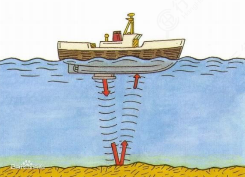 | Sonar technology utilizes the propagation of sound waves in water. By emitting sound waves and receiving the echoes reflected back from objects, the distance, location, and characteristics of a target can be calculated based on the round-trip time of the sound waves and the speed of sound in water. It is mainly divided into active sonar (which emits and receives echoes) and passive sonar (which only receives ambient sounds), just like how bats use echolocation. |
| Ultrasonic testing | The principle of ultrasonic flaw detection is based on the phenomenon that ultrasonic waves are reflected and refracted when they encounter internal defects (such as cracks and pores) or interfaces of different media when they propagate in materials. By emitting ultrasonic waves and analyzing the time, intensity and shape of the echo, the location, size and nature of the defect can be determined. It is a non-destructive testing technology. The core technology is to convert electrical energy into ultrasonic waves through a transducer and then convert the echo back into an electrical signal for analysis. |
| Flow measurement | Ultrasonic flow measurement mainly measures the time difference between the propagation of ultrasonic signals in the downstream and upstream directions. The greater the time difference, the faster the flow rate. This is combined with the cross-sectional area of the pipe to obtain the flow rate. It is often used for non-invasive measurement. |
| Architectural acoustic design | The acoustic design of concert halls, cinemas, recording studios, and other similar venues requires a deep understanding of the principles of sound propagation. The core principle lies in controlling the propagation, reflection, absorption, and isolation of sound, with the goal of optimizing indoor sound quality to achieve clear speech (high definition), rich musicality (moderate reverberation), and noise isolation, allowing sound to perform appropriately in specific environments. |